Glossary Entry
Dotori 도토리
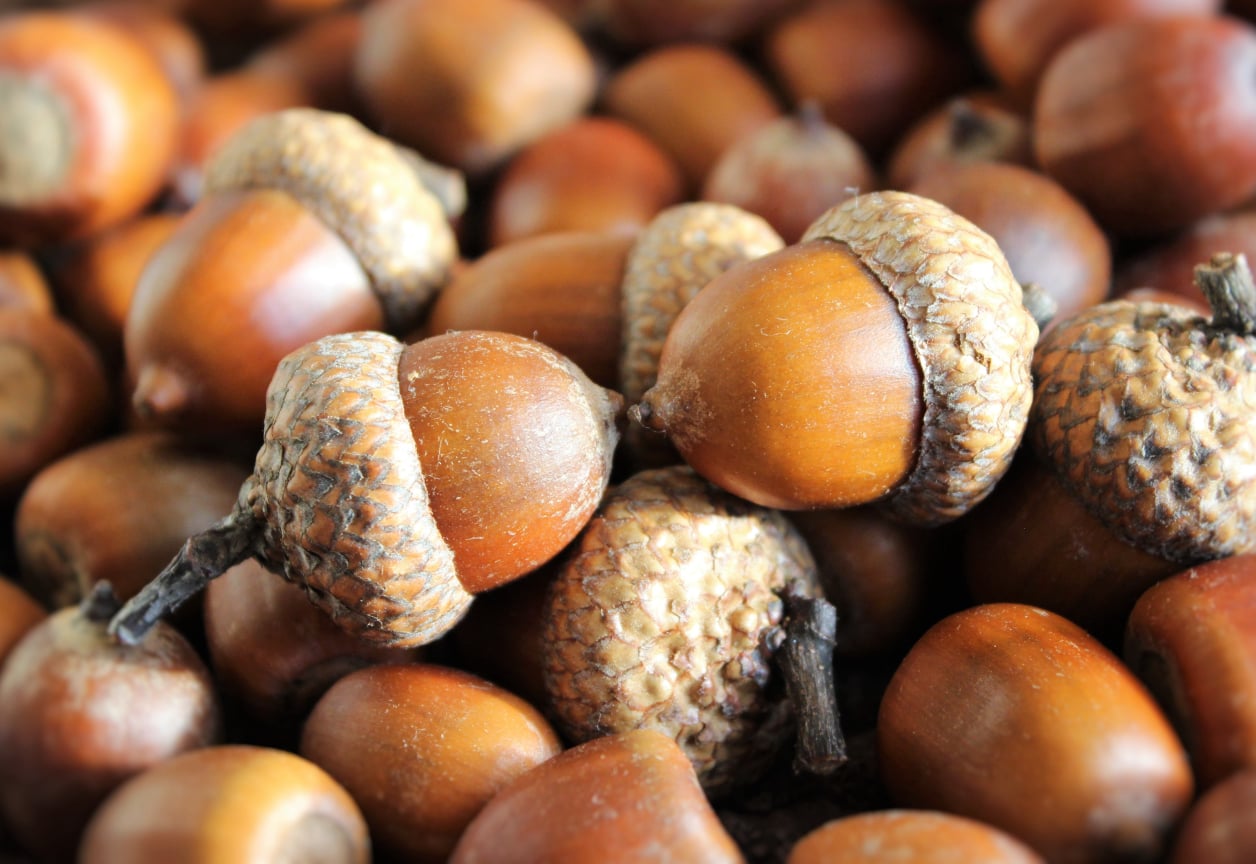
Acorns
도토리 Dotori
도토리 (Dotori) | Acorns
Definition: The nut (fruit) of oak trees and their close relatives.
Alternate Spellings: No widely used alternate spellings for this term.
Description: Dotori refers to the smooth, oval-shaped nut nestled within a rough, cup-shaped base. While acorns may appear unassuming, they play a vital culinary and cultural role in Korea. They are primarily processed into starch, powder, or flour, which is then used as an essential ingredient in various traditional Korean dishes like acorn jelly (Dotori-muk) and acorn noodles (Dotori-guksu).
Due to their high tannin content and other polyphenols, raw acorns require extensive preparation to be made edible. The traditional process involves leaching tannins by repeatedly soaking and rinsing the ground nutmeat in water. Once clear of bitter compounds, the resulting starch is dried and stored, ready to be transformed into culinary creations.
More Information: Acorns have been used as a food source across Asia, Europe, and the Americas for thousands of years. In Korea, they were especially significant in mountainous areas of ancient times, where oak trees were abundant. Dotori-muk, or acorn jelly, was a staple food in the autumn months when the acorn harvest was plentiful.
Although acorns were once a necessity for survival, they remain a cherished ingredient in modern Korean cuisine for their nutty flavor and unique texture. They are also prized for their nutritional benefits, offering starch and proteins while being naturally gluten-free.
On a Menu: Any dish with “Dotori” in its name will prominently feature acorns as the main ingredient. For example:
Dotori-muk bap (Acorn jelly mixed with rice)
Dotori-guksu (Acorn flour noodles or noodle soup)
Dotori-tteok (Rice cake made with acorns)
Acorn-based dishes might not always be found in regular restaurant menus, but they are popular in specialty or traditional Korean eateries, especially in autumn.
Significance in Korean Culture: Dotori holds an esteemed place in Korean culture, symbolizing resourcefulness and connection to nature. Acorns were once a lifesaving food during times of scarcity, especially in mountainous regions, where oak trees thrived. This historical association evokes a sense of gratitude and humility.
Acorn jelly (Dotori-muk) is the most famous dish made from acorns, and its slippery yet firm texture and earthy taste make it a standout in banchan spreads. Other products, such as acorn flour and noodles, have found their way into both traditional and modern Korean recipes, ensuring dotori remains relevant in today’s culinary scene.
Source: Korean Food Guide in English | hannaone
Article by Gil "hannaone" © Copyright 2007-2025. All rights reserved.
Image: from Pixabay